

Notes on architecture and AI.
What I work with: architecture, AI/ML, iGaming.
Video Generator, part 7: testing whether a character stays the same
Two characters, a croissant, and experiments in Vini Studio. How I test character consistency, reproduce failures, and revise a hypothesis when the next test contradicts it.
ReadHow much of a company can one person hold in their head?
ReadCRM on Markdown, part 2: 27 hours, 23 commits and a catalog of failures
ReadStrategy through code — one architect, the whole stack.
Enterprise architecture, AI/ML and ten years of iGaming domain knowledge — hands-on, in code.
Technology strategy & roadmap
- IT strategy aligned with business goals
- Product roadmap
- TCO optimization & FinOps
Cloud & enterprise architecture
- AWS, GCP, Kubernetes
- Microservices & event-driven design
- TOGAF enterprise architecture
AI/ML strategy & implementation
- AWS Bedrock, SageMaker
- LLM, RAG & AI agents
- AI process automation
High-performance development
- Go, TypeScript, Python, C++
- SAFe & Lean-Agile delivery
- DevOps and CI/CD pipelines
iGaming expertise
- Platform architecture: PAM, payments
- Game math, RNG development
- Regulatory compliance
Documentation & standards
- Architecture Decision Records (ADR)
- Technical specifications
- Team standards & guidelines
Outcomes you can measure.
AI call-center automation
>$1.2M saved per year on AWS Bedrock & SageMaker.
NATS event mesh at scale
200K+ msgs/sec across 1000+ systems, <100ms p99 latency.
Monolith → microservices
40% of transactional load migrated; release lead time down 57%, deploys under 15 minutes.
Decisions on data. Results in numbers.
Four ways to start.
From a one-off consultation to a fractional CTO role — pick the depth you need now.
Advisory sessions
Architecture reviews and roadmap sessions. One call — specific recommendations.
- Free 30-min intro call
- Deep advisory session (90 min)
- Expert consulting packs
POC & delivery
From concept to a working prototype. Architecture documentation is part of the result.
- POC Starter: scope & architecture
- POC Build: working prototype
- Architecture package with ADRs
Ongoing partnership
Technology leadership part-time: from monthly advisory to a full CTO roadmap.
- Advisor Lite: monthly guidance
- Strategic CTO advisor
- Fractional CTO: full roadmap
Workshops & training
Hands-on workshops for your team: architecture, AI/ML, working with ADRs.
- Architecture workshops
- AI/ML strategy sessions
- Remote & on-site
Senior expertise without a full-time hire.
Cost effective
Senior-level expertise without a full-time salary and overhead.
Flexible scale
The scope changes with your needs. You pay for hours, not a seat.
Fast start
Hiring a CTO takes months. Here the first call is this week.
Low risk
Start with a free consultation. A retainer comes after you see results.
Hands-on delivery
Working prototypes, executable architectures, code in production.
100% remote
Flexible timezone coverage and async communication.
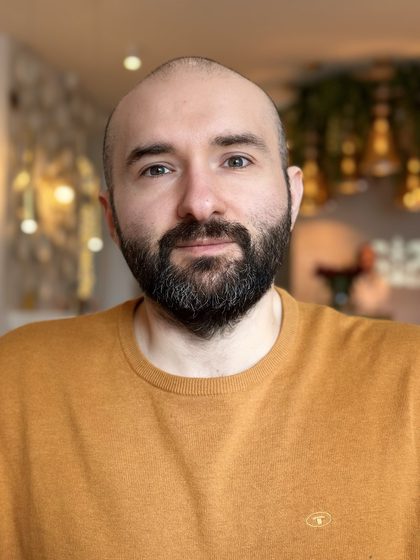
An architect who stays until it ships.
Ten years in iGaming: Casino, Sports, Poker, PAM, payments and CRM. Production AI/ML on AWS Bedrock, SageMaker and LangGraph.
I grew an architecture practice from 6 to 12 architects plus 20 system analysts, mentored three of them to Head-of-Technology roles and led 200+ engineers. I still write production code.
Let's talk
Write to me.
Leave a message and your contact details. Choose where you would like me to reply.